Khadija’s Story - Afghanistan
Stitching a Path Toward Independence

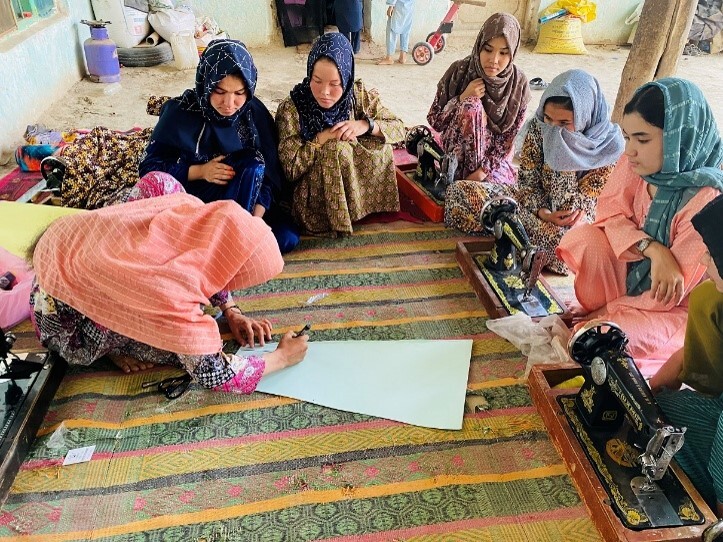
In Afghanistan’s rural Kaldar district, life is far from easy. In one of the poorest districts of northern Afghanistan, most families survive on irregular farm work, remittances, or whatever small trade they can manage. Jobs are scarce, prices keep rising, and many households rely on a single income. The situation is especially difficult for girls and young women. With few training opportunities and restrictions on movement, most have no realistic way to earn money or support their families.
In this district where opportunities for girls are scarce, lives 18-year-old Khadija. She had always hoped to learn a skill of her own and often heard stories about girls who attended professional tailoring courses. For her family, however, paying for such training was impossible. Like many parents in the area, hers were not comfortable with their daughter travelling far from home. For a long time, Khadija believed learning a trade would remain a distant dream.
That changed when HealthProm introduced a girls’ skill development programme in her village. For Khadija and many others, it felt like a long-awaited opportunity had finally arrived at their doorstep. Bringing literacy classes and vocational training directly to young women who had never had access before sparked a sense of hope.
The tailoring course, led by a skilled local tailor, provided sewing machines, fabric, scissors, and all the necessary tools. Just as importantly, it offered a calm and safe space to learn. For the first time, Khadija stepped into a room designed for girls like her: filled with chatter, concentration, and the quiet excitement of discovering something new.
Khadija learned to take measurements, carefully cut fabric, practice hand stitches, and eventually operate a sewing machine. Patient and determined, Khadija began producing baby blankets, children’s clothes, and simple garments—each one a little better than the last. As her skills improved, so did her confidence. She soon realized she could sell some of her work in nearby markets in Mazar-e-Sharif. When she earned money from something she had made herself, she felt an enormous sense of pride.
“Before, we could not afford beautiful dresses,” she said. “Now we can make them ourselves—and even sell them.”
For Khadija, tailoring is much more than a practical skill. It has brought independence, dignity, and a new role within her family. She now contributes to the household, supports her parents, and looks to the future with a confidence she once thought impossible.
Today, Khadija isn’t just sewing clothes—she is stitching together a stronger, more hopeful future for herself.


